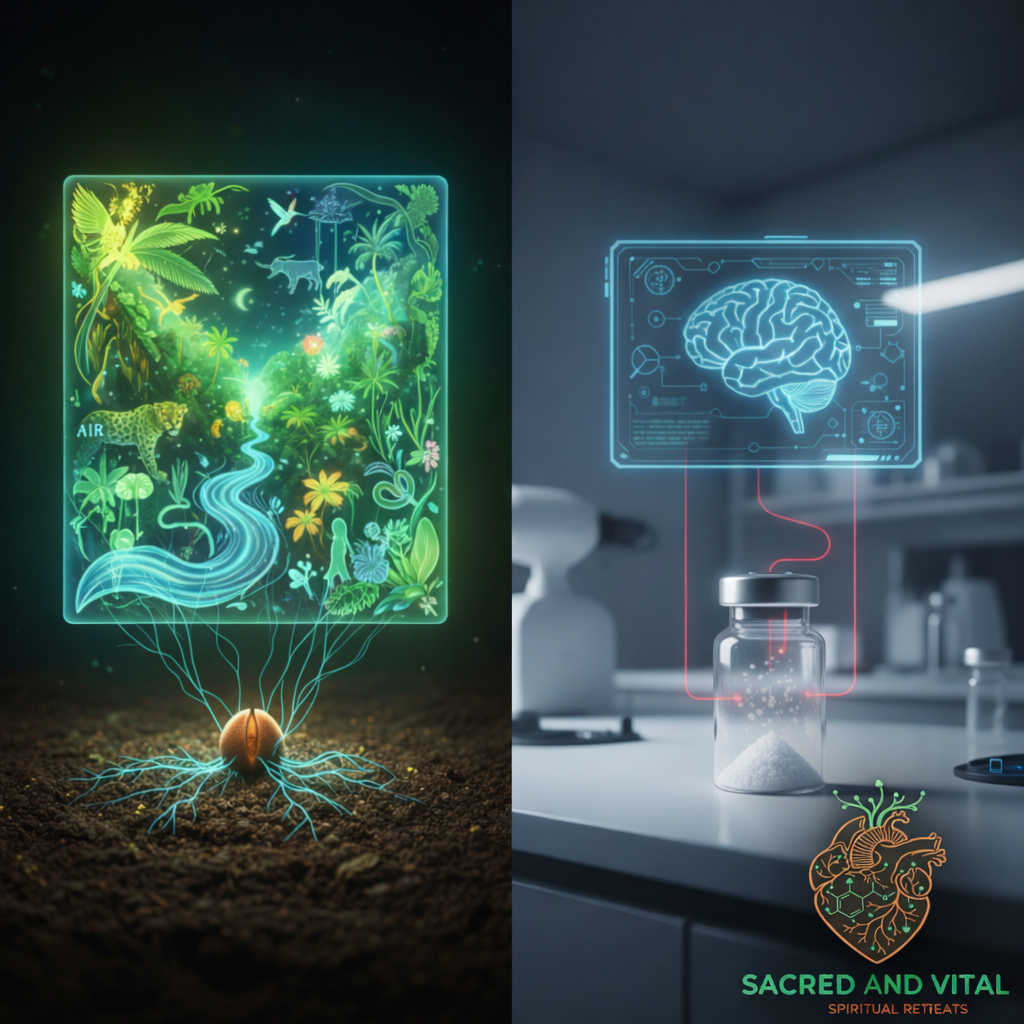
There is a meaningful difference between ceremony and consumption, and it goes deeper than language.
When medicine is treated as sacred, the nervous system is prepared first. Research in trauma-informed care shows that safety, intention, and context directly shape how the brain processes intense experiences. Preparation, ritual, music, and relational trust help regulate the amygdala and allow deeper emotional material to surface without overwhelm.
In traditional lineages, the medicine is never taken alone. It’s held within prayer, song, diet, and land. These elements create what modern psychology would call a container, a structured environment that supports integration rather than fragmentation.
When medicine is consumed without this container, the experience can still be powerful, but often stays cognitive or sensational. People may see a lot, feel a lot, yet struggle to translate it into lasting change. Studies on psychedelic integration consistently show that meaning-making and support after the experience are what predict long-term benefit, not intensity alone.
Sacred doesn’t mean rigid. It means respectful. It means slowing down enough for the body to trust what’s happening. And when the body feels safe, the deeper work begins.
Just an observation from years of sitting, listening, and learning, sometimes slowly, sometimes clumsily.
Medicine responds differently when we meet it with reverence.
Something to reflect on, gently. Much love
