Many people come to plant medicine carrying a sincere wish: to heal, to feel lighter, to finally move forward.
That intention matters, and how we walk with it matters even more.
Modern science now confirms what indigenous traditions have always known: trauma is not only something we remember with our minds. It lives in the body, the nervous system, and the way we relate to safety and connection.
When plant medicine opens the inner landscape, it can soften defenses and invite deep insight. This is a powerful gift, and it is also why gentleness, pacing, and support are essential. Growth does not come from forcing the door open, but from feeling safe enough to step through it.
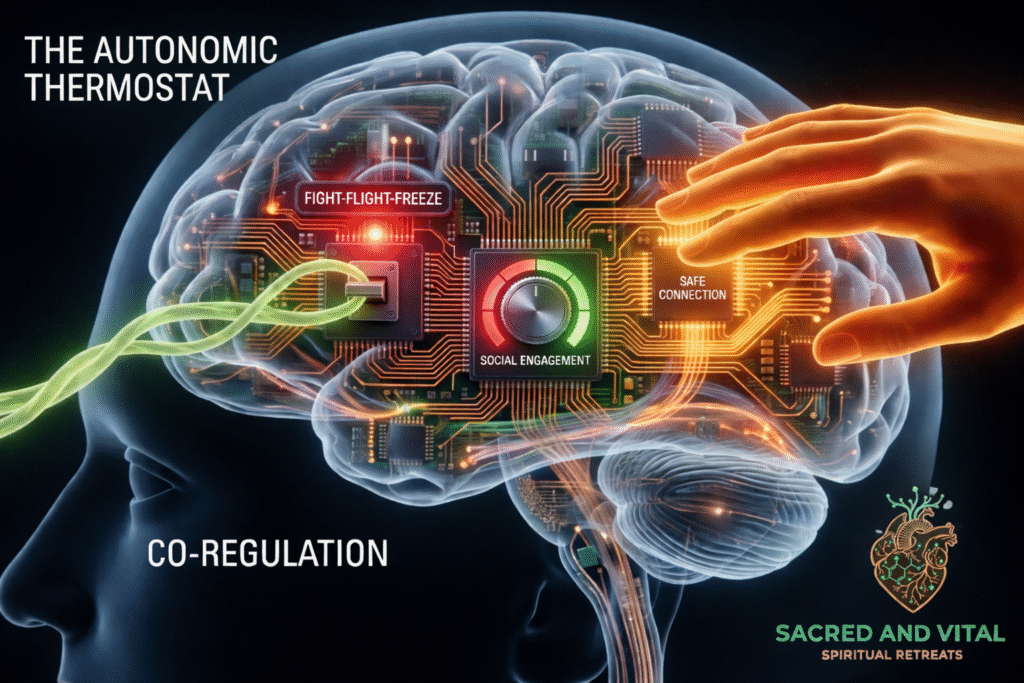
Healing happens best when the nervous system feels seen, protected, and accompanied.
What science helps us understand:
• The nervous system heals through safety (Polyvagal Theory – Porges):
Our bodies move out of survival mode not through intensity, but through trust, warmth, and regulated connection. A calm, supportive environment allows the system to shift naturally toward healing.
• The body remembers what the mind may forget (van der Kolk):
Trauma is stored somatically. When care includes the body, through rest, nourishment, presence, and grounding, integration becomes possible and sustainable.
• Neuroplasticity opens a window, not a shortcut (Carhart-Harris):
Plant medicine can temporarily increase the brain’s flexibility. This window invites learning and reorganization, but what we do after matters as much as what happens during.
• Context shapes outcome (Hartogsohn):
Preparation, intention, environment, and integration influence the experience more than the medicine alone. The container holds the healing.
• Clinical research emphasizes support (MAPS / Johns Hopkins):
The most promising outcomes come from models that prioritize preparation, relational safety, and thoughtful integration, especially for trauma-related work.
A gentle truth:
Healing is not about how much we can endure. It’s about how deeply we can feel safe while change unfolds.
Plant medicine is most beneficial when approached slowly, respectfully, and with guidance, allowing insights to settle into the body and become lived wisdom, not just powerful moments.
This path is not rushed.
It is walked, together.
Selected References:
• Porges, S. (2011). The Polyvagal Theory
• van der Kolk, B. (2014). The Body Keeps the Score
• Carhart-Harris, R. et al. (2018). Psychedelics and the entropic brain hypothesis
• Hartogsohn, I. (2016). Set and Setting in psychedelic research
• MAPS & Johns Hopkins Psychedelic Research Programs